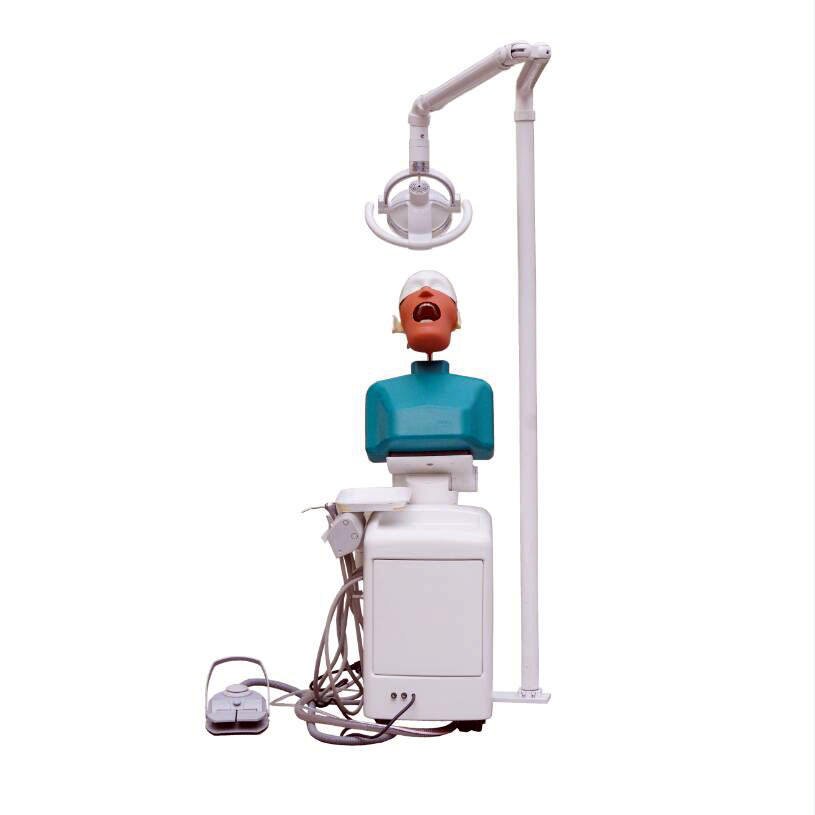
Mastering Preclinical Aesthetic Composite Skills: Phantom Head Practice with Practing Tooth Typodont
Read Time:3 Minute, 3 Second
Preclinical training is essential for dental students to develop precision and confidence before treating patients. A phantom head simulator fitted with a standard 28-tooth typodont (full adult dentition without third molars, using durable plastic or composite-like teeth) offers an ideal platform. This setup mimics real oral anatomy, occlusion, lip/cheek resistance, and ergonomic positioning, enabling realistic practice of cavity preparations, direct composite restorations, and aesthetic procedures like anterior veneers or Class III/IV fillings.
The phantom head, often clamped to a bench or dental unit, allows students to adjust head angles, practice mirror use, and simulate four-handed dentistry. With 28 teeth available, exercises can cover anterior aesthetics (e.g., incisal bevels, labial reduction) and posterior restorations, building transferable skills in a low-risk environment.

FG Diamond Burs: Essential for Aesthetic Composite Filling Restoration
FG (Friction Grip) diamond burs, inserted into high-speed handpieces, are indispensable for precise tooth reduction, margin definition, and contouring in aesthetic composites. They provide controlled enamel/dentin cutting with minimal micro-cracks when used properly.
Key models and applications in aesthetics include:
- Round burs (BR series) for initial access and rounded angles.
- Tapered flame/long flame (TF/TR series) for bevels and smooth labial/incisal transitions.
- Bullet/tapered burs (FO/SO series) for cervical and proximal precision.
- Extra-fine burs (EF/EX series) for final smoothing.
Students learn to progress from medium grit for efficient reduction to fine/extra-fine for seamless margins that enhance composite adaptation and esthetics.
Common FG Diamond Burs in Aesthetic Composite Work
| Bur Type | Models (Examples) | Grit | Main Aesthetic Use |
|---|---|---|---|
| Round | BR-41, BR-45 | Medium | Initial access, rounded line angles |
| Tapered Flame | TF-11, TR-13 | Fine | Bevels, labial reduction, contouring |
| Bullet/Tapered | FO-21, SO-20 | Medium/Fine | Cervical margins, proximal shaping |
| Extra-Fine | TF-11EF, EX-21 | Extra-Fine | Margin refinement, pre-polish surface |
Handpiece Recommendations for Preclinical Training
High-speed handpieces drive FG burs effectively. Traditional air-turbine high-speed handpieces deliver high rpm (up to 450,000) but lose torque under load and vibrate more. 1:5 electric increasing contra-angle handpieces provide consistent torque at 100,000–200,000 rpm, with lower vibration and smoother milling—preferred for fine aesthetic work.
Low-speed contra-angle handpieces (with polishing attachments) complete the sequence for final finishing.
Handpiece Comparison for Aesthetic Practice
| Feature | Air-Turbine High-Speed | 1:5 Electric High-Speed | Low-Speed Contra-Angle |
|---|---|---|---|
| Speed Range | 300k–450k rpm | 100k–200k rpm | 1k–40k rpm |
| Torque under Load | Drops noticeably | Consistent/high | High for polishing |
| Vibration | Higher | Low | Minimal |
| Best Use | Bulk reduction | Precision contouring | Finishing/polishing |
| Preclinical Advantage | Fast learning curve | Superior margins | High-gloss esthetics |
Sequential Handpiece Use in Aesthetic Composite Practice
A logical progression optimizes results on the typodont:
- Bulk reduction — Air-turbine high-speed with medium-grit FG diamonds for efficient outline and depth preparation.
- Precision contouring — 1:5 electric high-speed with fine FG diamonds for sharp bevels and smooth transitions.
- Finishing & polishing — Low-speed contra-angle with polishing cups, points, or brushes for final high-gloss composite surfaces.
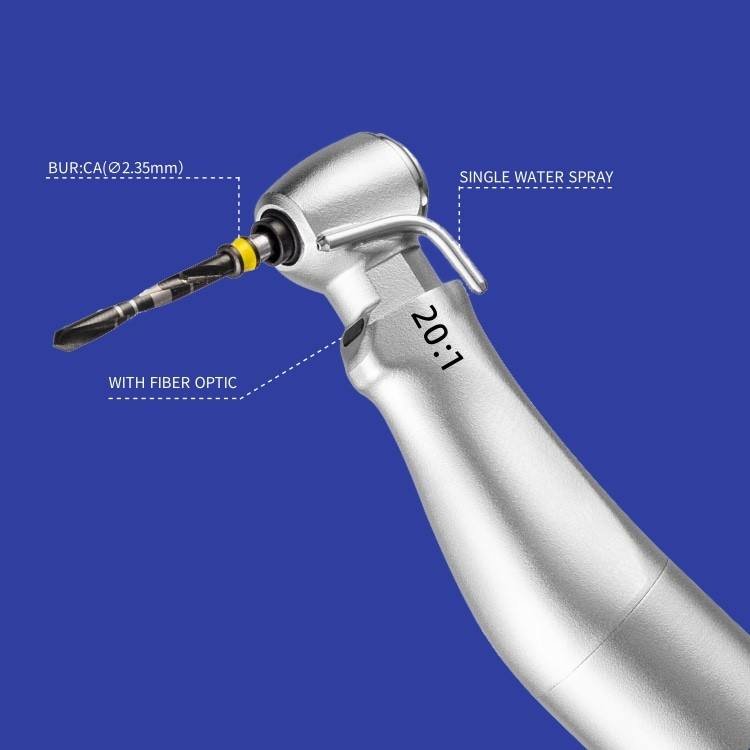
Handpiece Sequence for Aesthetic Composite on Typodont
| Step | Handpiece Type | Bur/Attachment Examples | Primary Purpose |
|---|---|---|---|
| 1. Initial Reduction | Air-Turbine High-Speed | BR-45, TF-12 (medium grit) | Cavity outline, depth cuts |
| 2. Margin & Contouring | 1:5 Electric High-Speed | TR-13, TF-11 (fine grit) | Bevel creation, smooth shaping |
| 3. Polishing Finishing | Low-Speed Contra-Angle | Polishing cups/points/brushes | Final gloss, surface refinement |
Conclusion
Phantom head practice with a 28-tooth typodont bridges classroom theory to clinical reality, emphasizing tool selection and sequencing. By naturally integrating FG diamond burs, progressing through air-turbine for speed, electric for precision, and low-speed for polishing, students achieve predictable, esthetic composite results. Consistent simulator sessions refine hand skills, reduce anxiety, and prepare for high-quality patient care in aesthetic restorative dentistry.


Happy
0 %

Sad
0 %

Excited
0 %

Sleepy
0 %

Angry
0 %

Surprise
0 %
 0
0
 0
0